
Impact of IoT and 5G on Web Application Security



.png)


Key Takeaways
- IoT and 5G together give attackers a bigger attack surface.
- Weak authentication makes IoT devices easy targets for brute-force attacks.
- Outdated firmware leaves many IoT devices open to known exploits.
- 5G networks face man-in-the-middle and DDoS risks.
- Compromised IoT devices can be used to attack web applications.
- Flaws in web apps can give attackers access to connected IoT devices.
- Tracking the latest threats and taking a proactive stance lowers breach risk.
Due to the rapid advancement of technology, there has been a surge in popularity of the Internet of Things (IoT) and 5G networks. These advancements have enabled us to connect and communicate more effectively, but they have also introduced significant security risks to web applications pertaining to the impact of IoT.
Globally, 5G is predicted to be a US$2.2 trillion digital economy by 2034, while the global IoT Market size in terms of revenue was reasonably estimated at $300.3 billion in 2021 and is anticipated to rise to $650.5 billion by 2026, presenting a CAGR of 16.7%– which requires new network technologies and, more importantly, new approaches to securing these networks.

Understanding IoT and 5G
The Internet of Things (IoT) is a network of devices that can communicate with one another and exchange data through the internet. These gadgets can be anything, including automobiles, medical equipment, and smart household products. Sensors and software that allow for data collection and exchange via the internet are built into IoT devices.
5G, on the other hand, is the fifth generation of cellular mobile communications technology. It offers faster download and upload speeds, lower latency, and the ability to connect more devices simultaneously. IoT is one of many new applications and services that 5G networks are built to serve.
Industries like healthcare, transportation, and manufacturing have the potential to change as a result of the convergence of IoT and 5G technologies. However, there are serious security risks as well.
Security Risks Associated with IoT and 5G
IoT devices are vulnerable to a range of attacks due to their weak security measures. For example, many IoT devices lack proper authentication, making them easy targets for brute force attacks. Furthermore, a lot of IoT devices use outdated firmware that may be vulnerable to attack.
In addition to the vulnerabilities of IoT devices, 5G networks have an increased attack surface, providing attackers with more opportunities to exploit vulnerabilities and gain unauthorized access to devices and data. For instance, attackers may conduct a man-in-the-middle attack to intercept and manipulate data or launch a DDoS attack to overload the network.

Impact of IoT & 5G on Web Application Security
The combination of IoT and 5G technology has significant implications for web application security. Attackers could use compromised IoT devices to launch attacks on web applications, or they could exploit vulnerabilities in web applications to gain access to IoT devices.
Web application security would be significantly impacted by IoT and 5G technologies. With more connected devices and more data being communicated, there are new security concerns that need to be addressed.
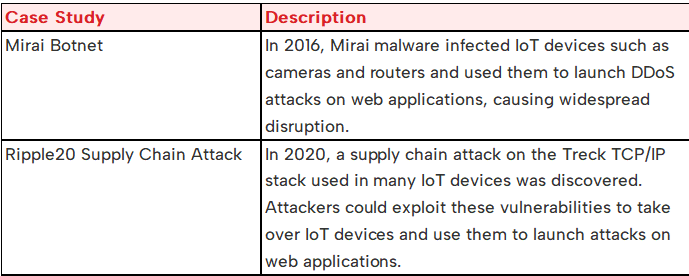
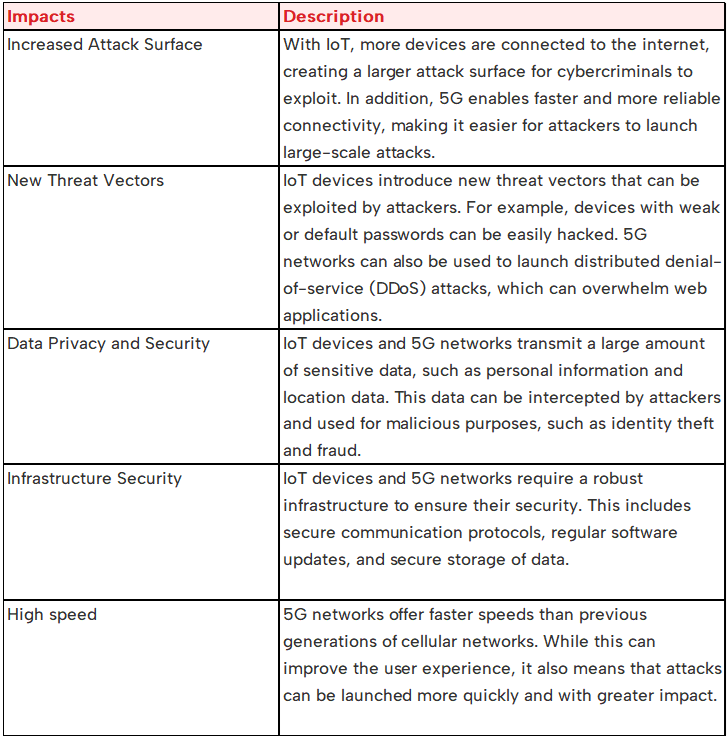
Some of the key impacts of IoT and 5G on web application security include:
To mitigate these security risks, organizations must adopt best practices for web application security. The following table summarizes some of the best practices for securing web applications in the context of IoT and 5G.
Best Practices for Web Application Security in IoT and 5G
Conclusion
In conclusion, IoT and 5G technology have brought significant benefits to our lives, but they also pose significant security risks. It is important to stay up-to-date with the latest security threats and vulnerabilities in IoT and 5G technologies. By taking a proactive approach to security, organizations can reduce the risk of data breaches and cyber-attacks.


Keep Reading
.png)




We break browsers before someone else does
This is the default text value

