
6 Device Penetration Testing Tools You Must Be Aware Of



.png)


Key Takeaways
- Bus Pirate provides access to common hardware protocols, including UART, SPI, I²C, and JTAG/SWD.
- JTAGulator simplifies the identification of hidden or undocumented hardware debug interfaces.
- ChipWhisperer supports side-channel analysis and voltage or clock glitching experiments.
- HackRF enables broad radio-frequency analysis, transmission, replay testing, and protocol research.
- Ubertooth is useful for capturing and analysing Bluetooth communication.
- KillerBee provides a security-testing framework for IEEE 802.15.4-based wireless protocols.
IoT and smart devices are dominating the market at a tremendous rate. But with growing competition in the market, these devices often forgo proper standard and security procedures leading to attacks, including, Mirai botnet, reaper attack, and others that are yet to be discovered. The good news is these incidents have cautioned companies to take security testing more seriously. This has resulted in a host of security testers, developers and software security professionals getting into IoT penetration testing.
This post talks about tools that you must absolutely be aware of if you are into penetration testing of smart IoT devices or even for bug bounties (companies like DLink and Wink do offer bounty for hardware vulnerabilities)
Now let’s go into the tools:
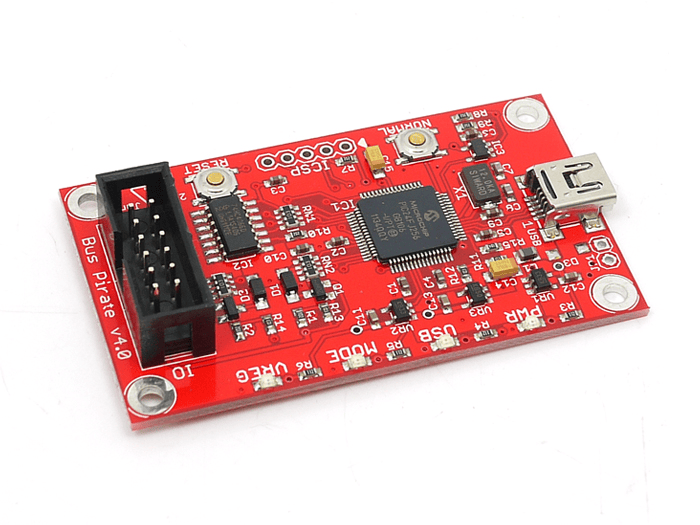
- Bus Pirate
Bus Pirate is like the Holy Grail for hardware penetration testing. It supports most of the most commonly used protocols like UART, SPI, JTAG/SWD and a whole lot of more protocols. Connect to a router’s UART and you get the shell access. You can use it to dump both SPI and I2C Memory. You can initialize JTAG/SWD interface for controllers and processors which could be used to dump the firmware and debug the code to find exploits. You can also sniff communication like I2C and SPI and see how the device is communicating with the sensor or EEPROM and reverse engineer it to exploit the system. My favorite feature is that it can also act as a logic analyzer and PWM generator. You can buy it at SeeedStudio
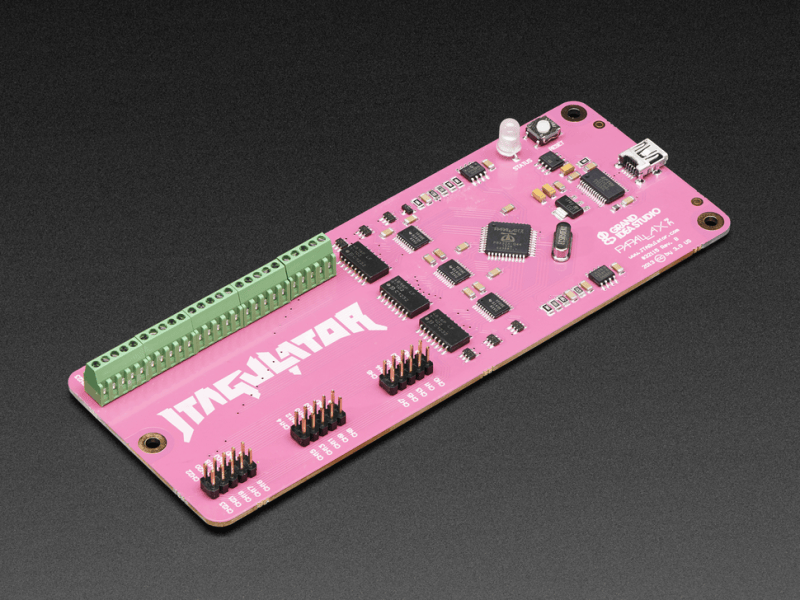
- JTAGulator
Now we have a target device and bus pirate to access the device. The next question is where do I connect? You can trace the pcb tracks and find it. But in case of complex devices, the number of layers and vias are more and it is complicated to identify the JTAG pins unless you chemical etch the board or X-Ray the board which is an expensive affair.
Joe Grand has created a hardware which had around 24 GPIOs which could be connected to the unknown pins and pads of the board and the device will automatically scan for the JTAG pins and returns the JTAG pinouts of the target board. This is very handy when your target board is complicated and uses an unmarked processor/controller.
JTAGulator can also do UART scanning and baud rate identification. It is pretty much expensive at 200$, but it is a onetime investment and will help you at a lot of time.
You can buy it from AdaFruit
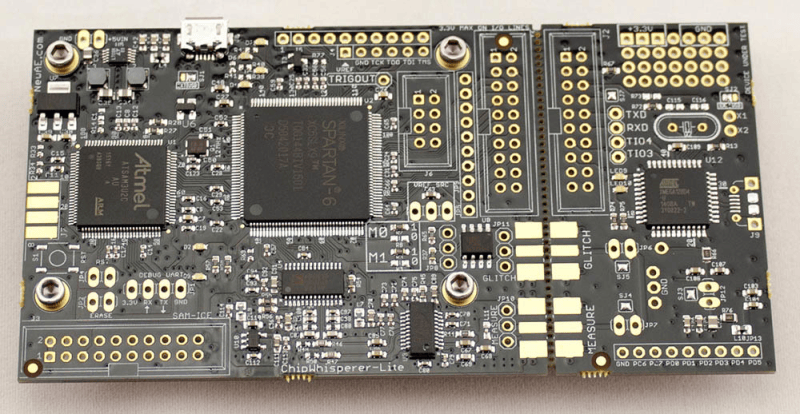
- ChipWhisperer
This is an amazing tool built by Colin O’Flynn and it is used for advanced penetration testing that involves hardware side channel analysis and voltage/clock glitching attack to gain access to the target device, find encryption keys and various attack vectors. The software toolchain is user-friendly which allows the user to perform an attack on the hardware in a simple manner without the need to understand the core logic of programming the FPGA or the ADC acquisition. It also comes with a standard target board which could be used to experiment with side-channel analysis and glitching attacks. This device is powerful enough to glitch a full-fledged Android phone too. There is large set of documentation regarding the usage. It is the best starter tool if you’re into IoT testing and wants to exploit it further deep.
You can buy it at newae store.
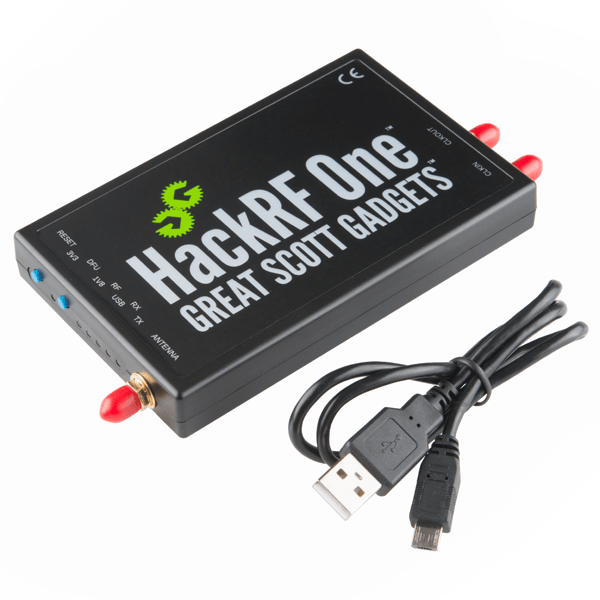
- Hack RF
Majority of the IoT devices have some sort of wireless communication, be it a typical RF or a Zigbee or a LoRa. If you want to test the wireless security, HackRF is the tool for the job. HackRF is an advanced software defined radio with the range of 1MHz to 6GHz. Unlike your RTL SDR, Hackrf can transmit and receive radio waves but it is half-duplex, which makes it easy to perform air-borne attacks like replay attacks, fuzzing, and jamming. It can sniff wide range of wireless protocols from GSM to Z-wave. With the help of GNURadio toolset, you can build your own wireless protocol and test it against a target device.
- Ubertooth
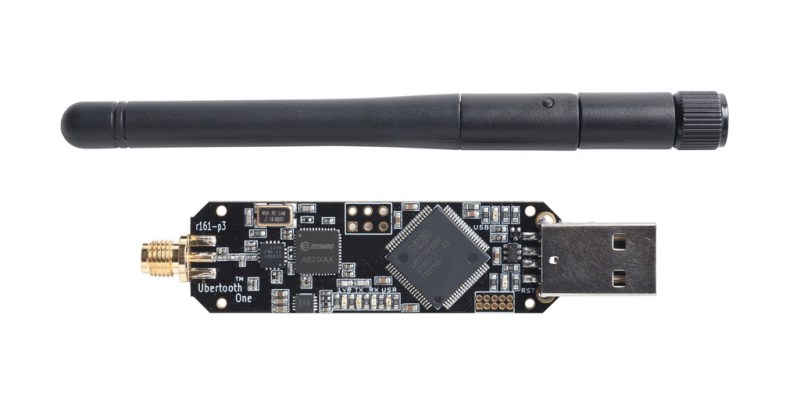
Most of your smart device comes with Bluetooth ranging from a smartwatch to a smart buttplug. Now it is absolutely necessary to penetration test this wireless protocol. Ubertooth is a Bluetooth ISM sniffer which is used to sniff all the communication that is happening in the L2CAP layer of your Bluetooth communication. Unlike HackRF, Ubertooth takes cares of the channel hopping and capture all the packets and saves it in a Wireshark file. Mike Ryan has created a script around it, which can find the Bluetooth keys and is also transmitted through the air which is used to encrypt the communication, can be recovered and the communication can be reverse engineered for sensitive information. Once a Bluetooth communication has been reverse engineered using Ubertooth it could be used to exploit the device further. You can buy this in SparkFun
- Killerbee
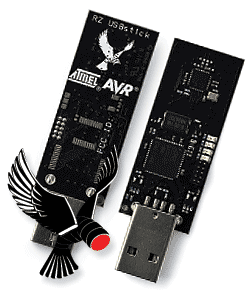
If you’re into industrial IoT/M2M or wireless sensor nodes, you might have encountered wireless protocols like Zigbee, 6LowPAN or Thread. These are IEEE 802.15.4 based wireless protocol which is mostly used for industrial application. Now most companies have started using it for commercial use like a home security system or home automation. KillerBee is a wireless penetration testing framework for 802.15.4 based wireless protocols. It allows you to perform attacks like replay attack, fuzzing, and packet analysis and lets you write your own exploit using SCAPY. It also supports wardiving. It supports all protocols that works with IEEE 802.15.4 protocol. It is a very user-friendly toolset written around python. Most easily available hardware dongle is RZUSBStick by Atmel. You can get it from Digikey
By Arun Magesh
The author is a security researcher at Payatu Technologies. You can connect with Arun on Twitter or LinkedIn.


Questions Web Application teams ask us.
Keep Reading
.png)




We break browsers before someone else does
This is the default text value

